-
 SICILY REGIONCase history
SICILY REGION
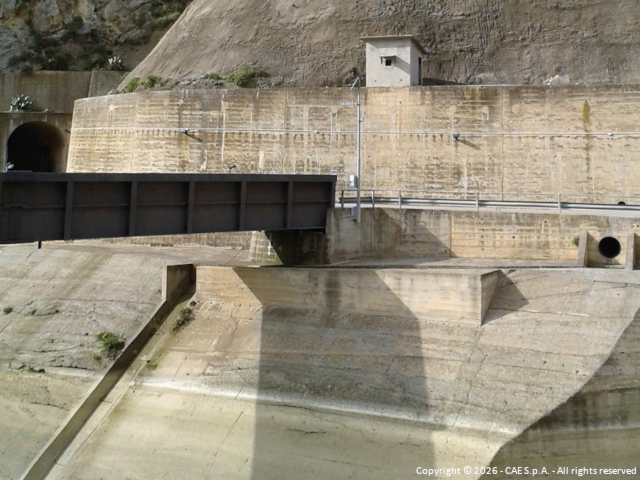
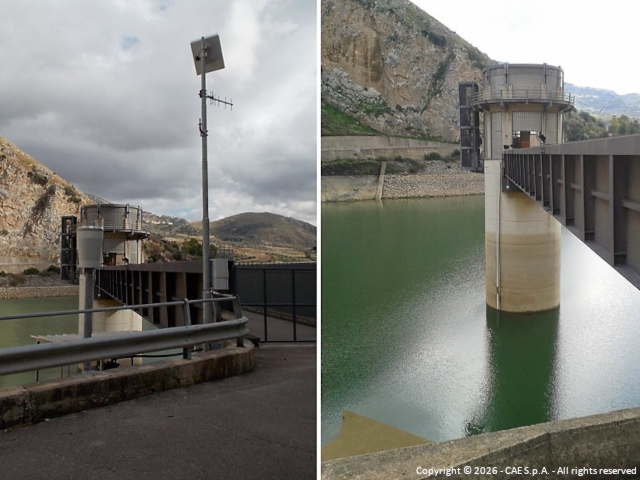
Implementation of the hydrological telemonitoring system in the San Leonardo, Jato and Scanzano basins
REQUIREMENTS
In recent years, Sicily has been facing a major water emergency threatening water availability for both the population and key economic sectors of the island’s economy, such as agriculture and livestock farming. This emergency is caused by several factors, including a significant reduction in rainfall and excessively high temperatures.
In this context, it is essential to adopt efficient and predictive management of reservoirs and available water resources, both for drinking and irrigation purposes. For this reason, a tender was launched and awarded to CAE for the implementation of the hydrological monitoring system of three pilot basins: San Leonardo, Jato and Scanzano. The investment, promoted by the Regional Department for Water and Waste, is funded under the Pact for the South of the Sicilian Region, FSC 2014–2020.
FEATURES
The interventions were defined based on the need to monitor in real time the incoming and outgoing water volumes, in order to make the control system more effective, also with a view to reservoir sedimentation processes and flood management strategies.
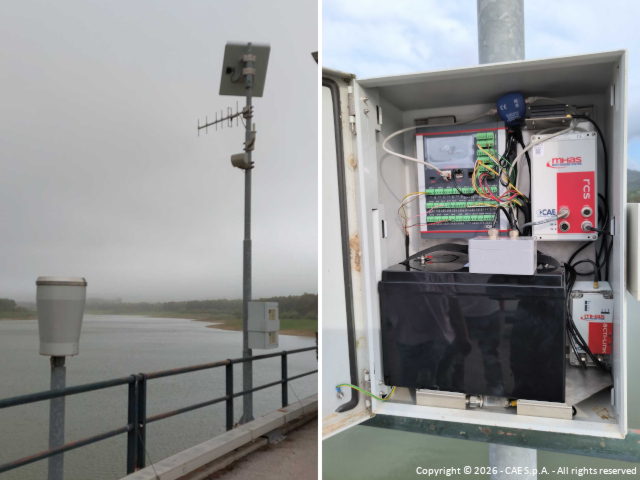
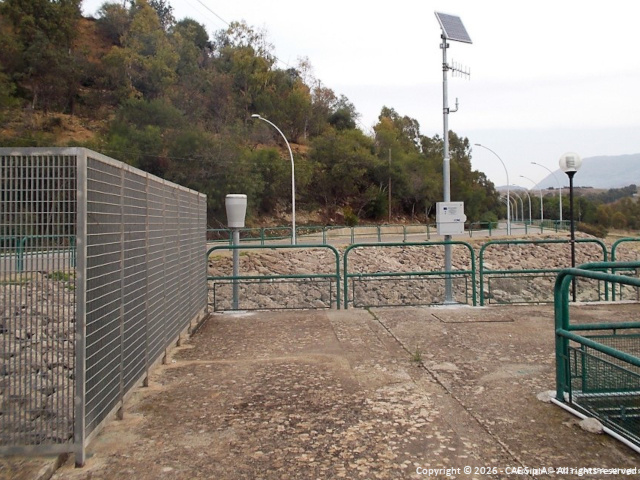
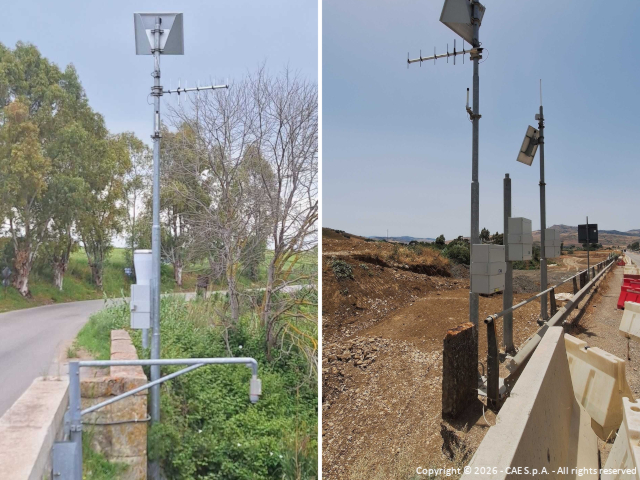
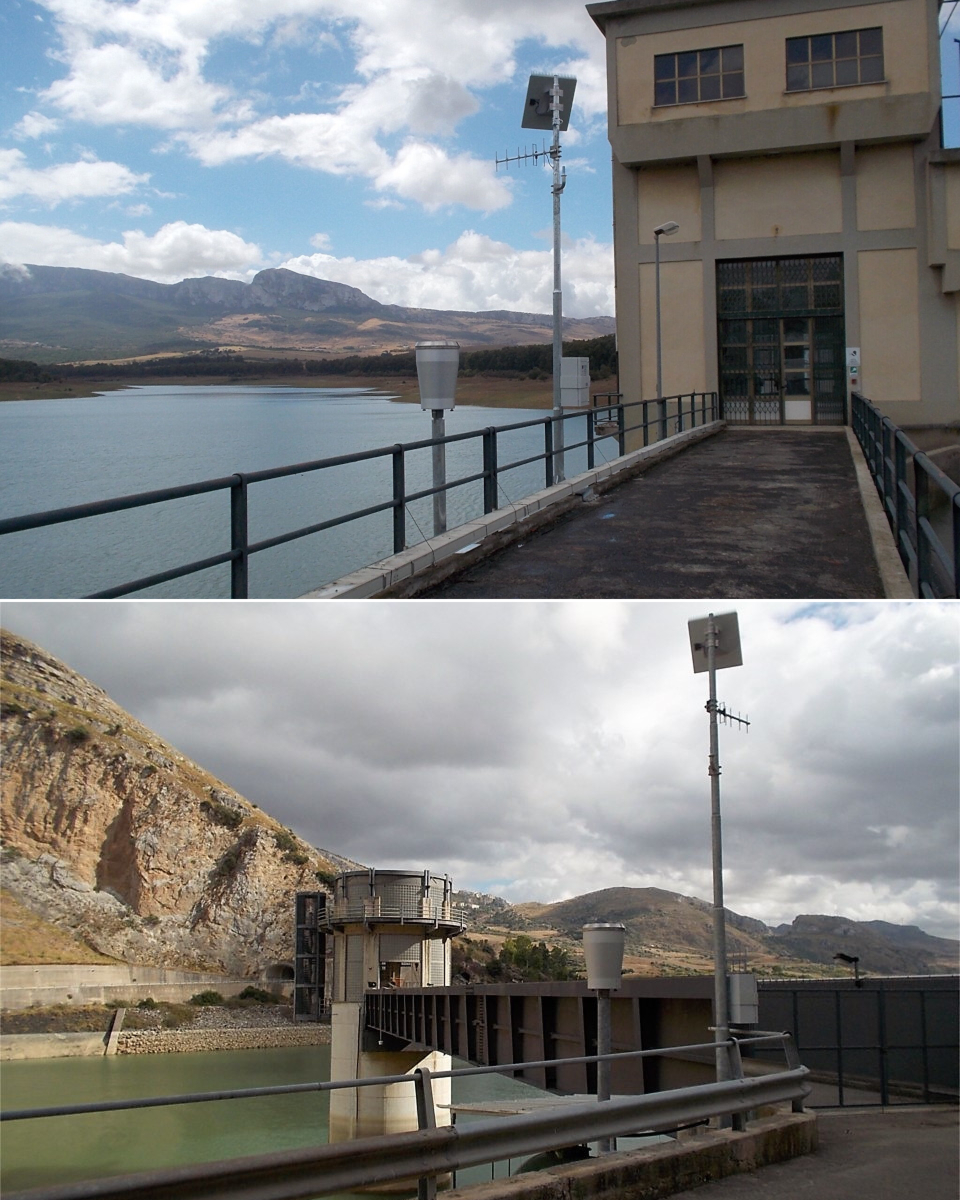
To achieve these objectives, CAE upgraded some of the stations already included in the regional telemonitoring network dedicated to meteorological and hydrological monitoring across the entire territory, while also installing additional stations, especially within the three pilot basins: San Leonardo, Jato and Scanzano.
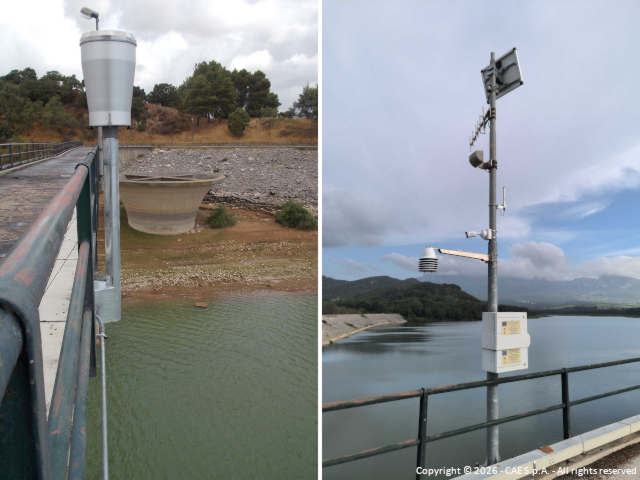
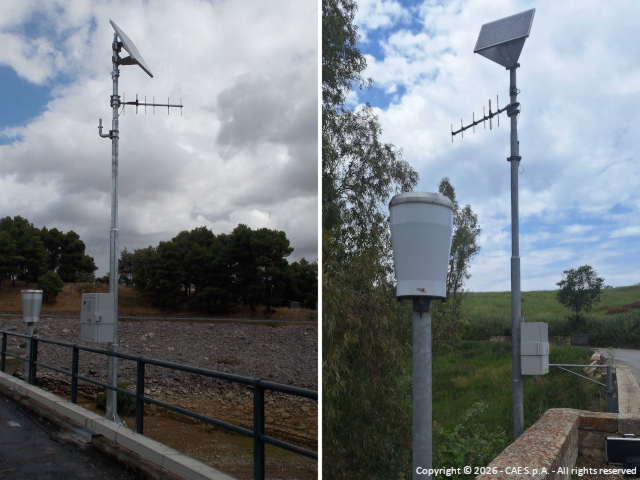
The station technologies were updated with products from the CAEtech line, including CompactPlus dataloggers, PG10 rain gauges, THS thermo-hygrometers, WLR radar water level sensors, as well as total stations, current meters, ADCPs and various GNSS instruments.
In the sections where new hydrometric sensors were installed, all activities necessary for developing the discharge rating curves were carried out. In particular, the interventions included determining the elevation of the hydrometric zero level above sea level, creating a GPS network, calculating orthometric elevation surveys, carrying out topographic surveys of the riverbed using total stations, applying a mathematical model to define the steady flow profile and build the discharge rating curves, as well as performing flow measurements useful for calibrating the model.
With the completion of this project, the set of information available to the managers of the involved water basins allows for more informed management of predictable incoming water volumes, thus facilitating the regulation of any discharge structures.
COMPOSITION
To implement the hydrological monitoring system for the Sicilian basins, CAE supplied and installed:
- 5 thermo-pluviometric monitoring stations;
- 3 hydro-pluviometric monitoring stations;
- 4 hydrometric monitoring stations;
- 3 hydrometric sensors integrated into existing stations;
- 3 operational data reception centres located at the guard houses of the respective dams, directly connected to the Civil Protection server both via ADSL and Regional Radio Network, through dedicated radio panels, ensuring autonomous management and real-time data acquisition;
- Restoration of 2 existing monitoring stations.
At each control centre workstation, dedicated hydrological basin modelling software was installed, based on the analysis of the hydrographic network and on three-dimensional representations of the territory.
 DOWNLOAD PDF