-
 NewsRadio IP and Machine Learning: CAE develops Dynamic Adaptive Routing (RAD)
Radio IP and Machine Learning: CAE develops Dynamic Adaptive Routing (RAD)
April 2026

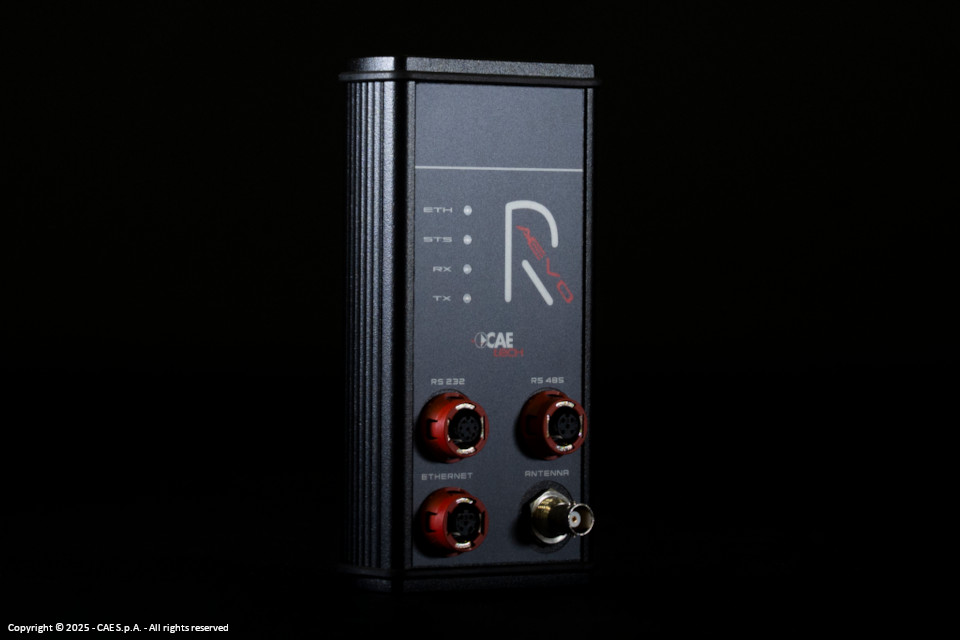
The radio transmission medium, often complemented for redundancy by cellular or satellite data transmission technologies, continues to be the most widely used solution to ensure the security and reliability of telemetry networks in Italy for civil protection purposes. This is because radio technology makes it possible to establish a dedicated data transmission channel, owned by the public administration, which combines low power consumption, bidirectional communication, and a adequate speed and capacity for data collection.
CAE has for several years been offering the RAEVO radio, capable of natively carrying IP protocols such as the CoAP standard. This radio, which operates with very low power consumption compared to other IP devices currently on the market, can be easily interfaced with existing broadband backbones: a virtuous example of technological interoperability at the service of the Public Administration.
Today, as extreme rainfall events become increasingly short, intense, and localized, an important requirement for users of real-time monitoring networks for civil protection purposes is faster telecommunications, so that an Italian Region with a widespread distribution of measurement stations across its territory can receive updated data via radio every few minutes.
RAEVO is the first transmission system with a high level of standardization in this sector, characterized by IP protocol support, reduced energy consumption, and speeds of up to 14,400 baud.
Another key element, for those managing hydrometric and meteorological monitoring networks for civil protection purposes, is the reliability of the network itself. The radio, owned by the administration, is chosen to precisely ensure the reception of real-time measurements even during emergencies, when public cellular networks may struggle. Recent events have demonstrated the importance of this choice, which is why CAE has always invested in the development of tailored solutions to improve the safety and reliability of radio networks.
CAE can design and implement UHF radio networks in which message routing from the field to the control center, and therefore real-time data collection, occurs through “multiple paths”. This feature of the systems, highly appreciated by Civil Protection operators, is now further enhanced thanks to CAE’s latest research achievement: Dynamic Adaptive Routing (RAD).
This functionality, now offered as a service, is enabled by software that leverages procedures typical of Machine Learning techniques to route data packets through the radio network along the path that, each time, proves to be the most efficient and secure. Routes are therefore calculated in real time based on network diagnostic parameters such as RSSI, operating percentages, etc. This solution is unique in a radio product of this category, and CAE is currently filing a patent for it.
The advanced RAD functionality, which further enhances the advantages already offered by “multi-path” architectures, can be applied both to co-frequency networks and to networks with high-low frequency pair channels, making it a possible upgrade for all users already using standard RAEVO radios in their monitoring networks.
Although it is an effective and modern solution, RAD does not require hardware upgrades to the devices and therefore always allows a return to the commercial solution, using a traditional configuration of devices and routing, ensuring full maintainability of the network even by third parties.