-
 NewsPNRR – Hydrometeorological, Agrometeorological and GHG Networks: Ongoing Works
PNRR – Hydrometeorological, Agrometeorological and GHG Networks: Ongoing Works
June 2026
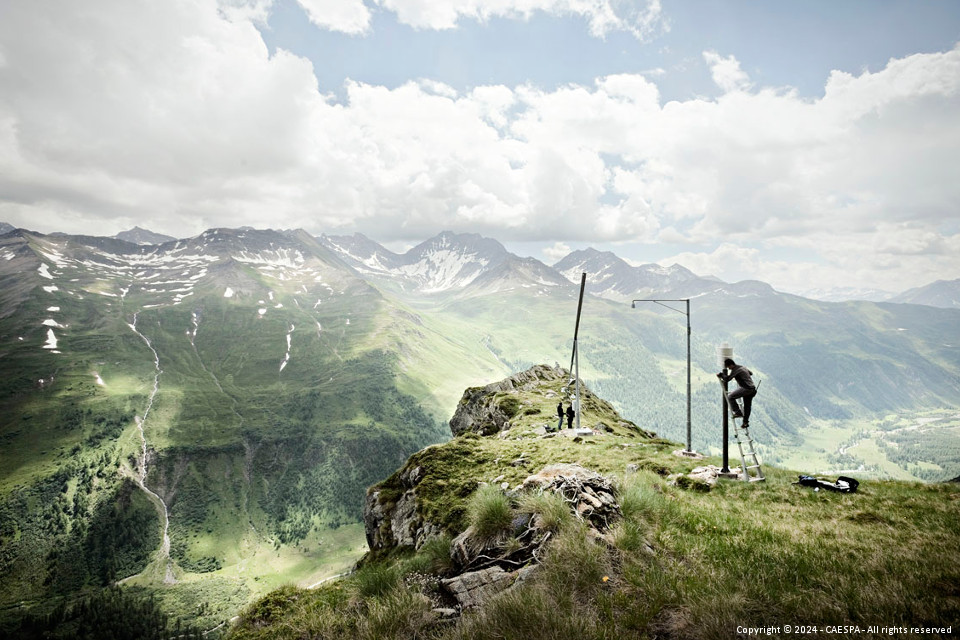
Thanks to the funds allocated under the PNRR, the Italian Ministry of the Environment and Energy Security (MASE) has issued activation orders under the framework agreement awarded to the consortium (RTI) of which CAE is a member. These orders require the implementation of the hydrometeorological, agrometeorological, and GHG monitoring networks within the Integrated Monitoring and Forecasting System (SIM).
Each Italian region has autonomy in defining the various components of its own hydrometeorological network; however, all data flow into the integrated system managed by the National Department of Civil Protection. Through this new project, turnkey solutions are being provided: each installed component is fully interoperable with existing networks, according to the characteristics and requirements defined by the individual regions.
The objective is to increase both the quantity and quality of data available to those responsible for managing the increasingly frequent emergencies caused by climate change and other environmental factors. These data are also essential for studying natural phenomena and, consequently, for developing forecasting models.
Furthermore, the project recognizes the importance of measuring and understanding agrometeorological and climatic variables for agricultural management, both from a prevention perspective (such as the development of plant diseases) and from a forecasting perspective (such as irrigation and fertilization planning). In this context, the project will strengthen and expand the National Agrometeorological Network in order to provide an adequate representation of the main meteorological phenomena affecting agricultural areas throughout the country, in line with the requirements and needs collected from the Administrations responsible for managing existing stations.
Last but not least, the GHG flux measurement network, managed by CREA (Council for Agricultural Research and Analysis of Agricultural Economics), plays a key role. This network supports high-quality research on climate change and contributes to increasing the usability and accessibility of related data.
This is a major challenge: the ongoing activities include field interventions across a total of 4,300 sites. Among these, 550 are new monitoring stations equipped with 3,800 new sensors.
The required instrumentation includes a wide range of technologies, such as: albedometers; ultrasonic, mechanical, and sonic anemometers, including heated versions; barometers; disdrometers; sunshine recorders; radar water level sensors; piezometers; snow gauges; rain gauges; global and UV radiometers; leaf wetness sensors; Photosynthetically Active Radiation (PAR) sensors; surface snow temperature sensors; soil temperature sensors; present weather sensors; soil moisture sensors; surface and immersion water velocity sensors; neutron probes for Snow Water Equivalent (SWE) and soil moisture measurements; thermo-hygrometers; air thermometers; and webcams.