-
 NewsPAOLO BERNARDI AWARD: MACHINE LEARNING AND ARTIFICIAL INTELLIGENCE TO IMPROVE EARLY WARNING
PAOLO BERNARDI AWARD: MACHINE LEARNING AND ARTIFICIAL INTELLIGENCE TO IMPROVE EARLY WARNING
July 2026
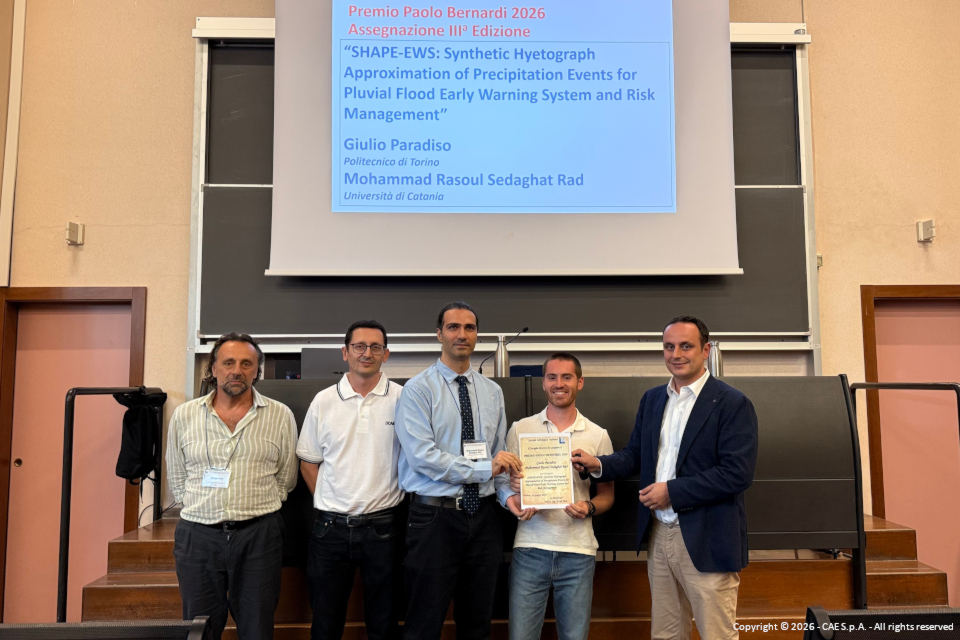
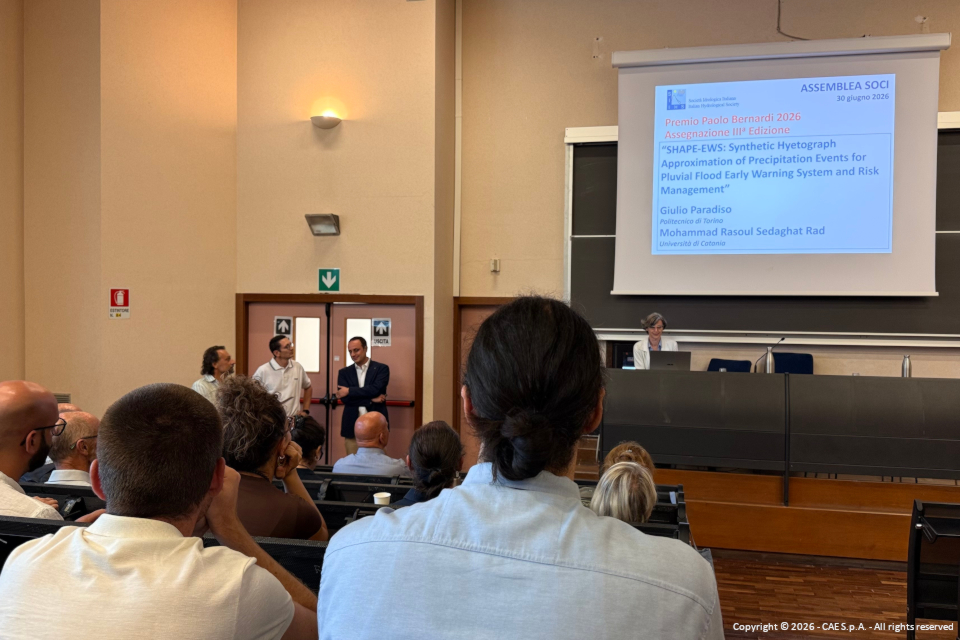
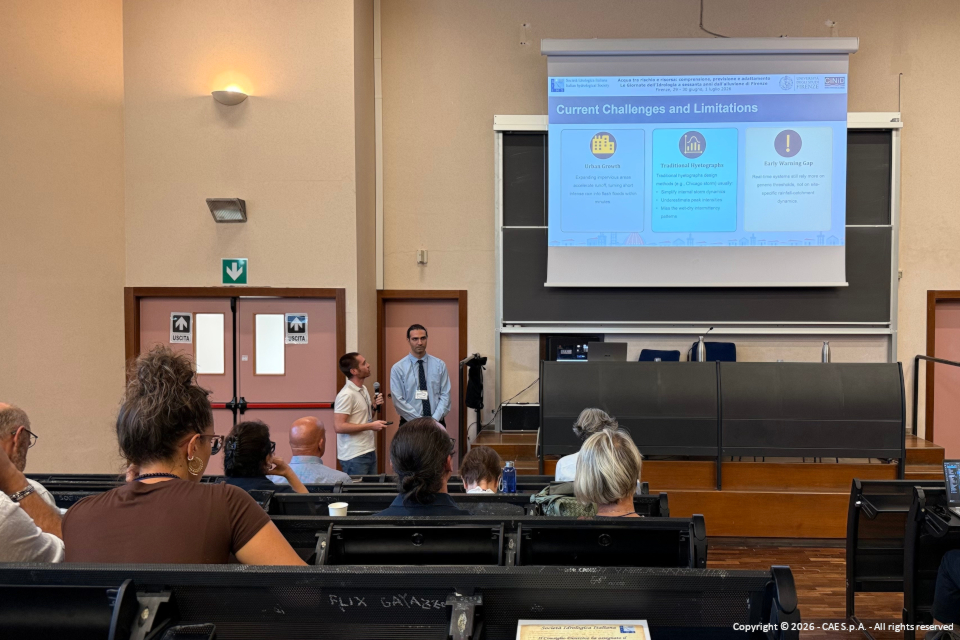
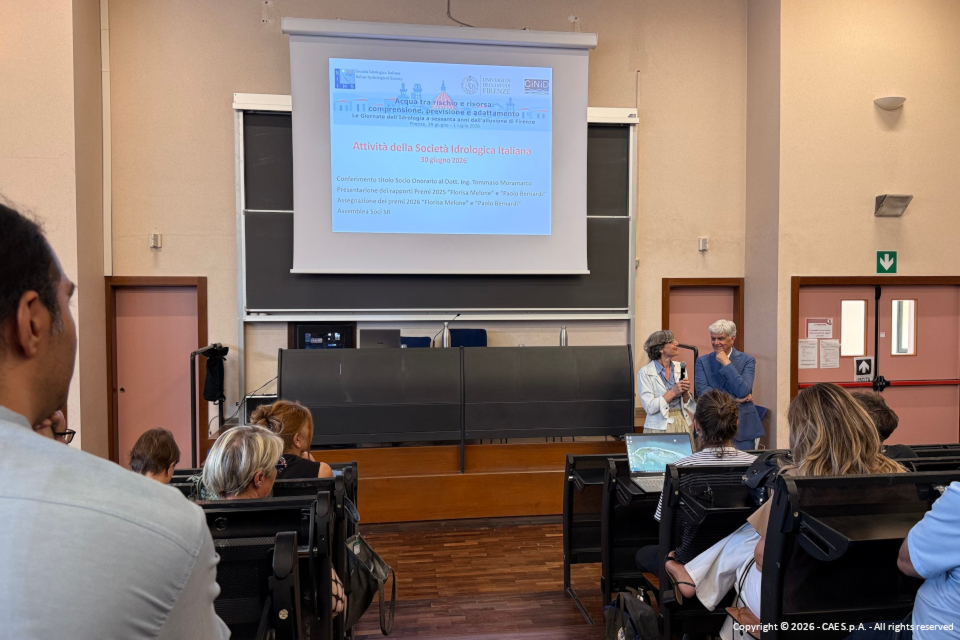
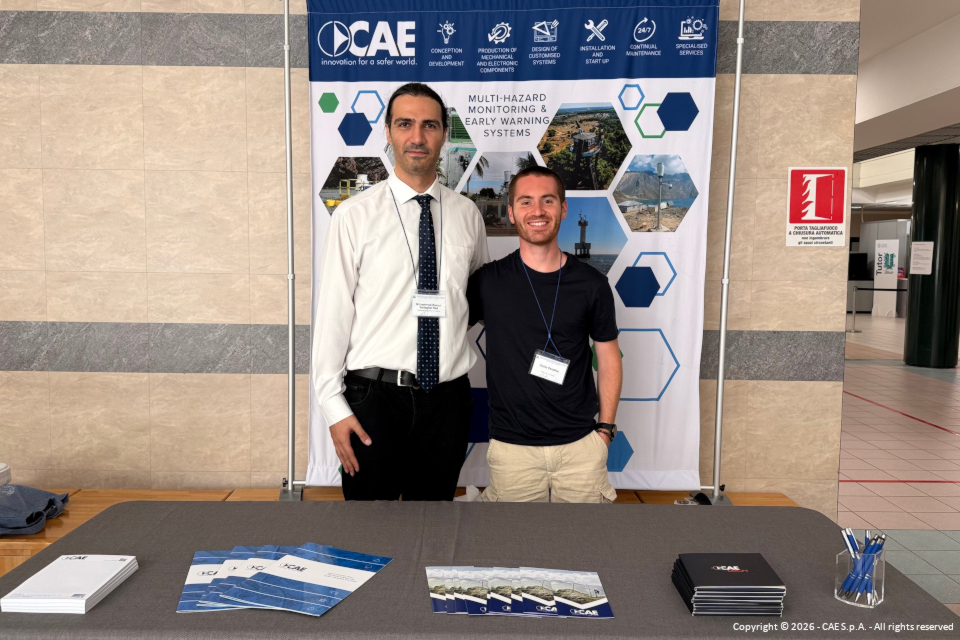
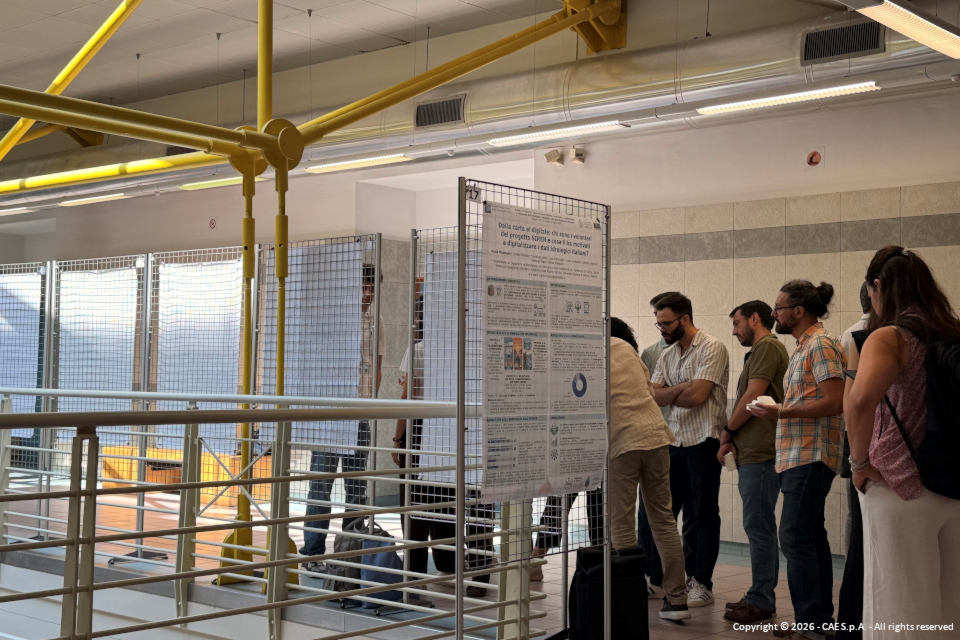
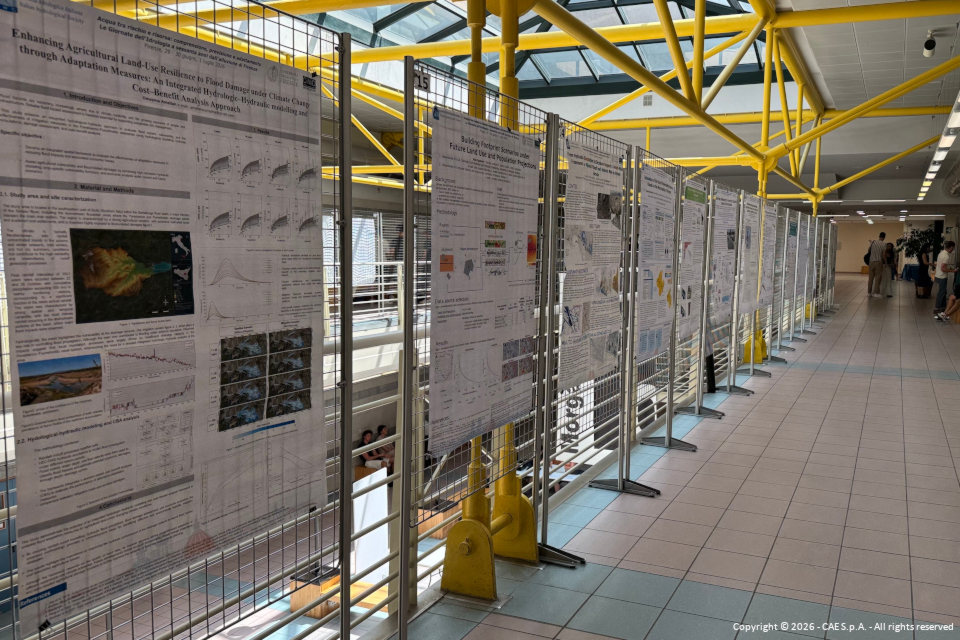
During the 2026 Hydrology Days of the Italian Hydrological Society (SII), held from June 29 to July 1 at the Morgagni Educational Center of the University of Florence, the Paolo Bernardi Award, established in honor of one of CAE’s founders and now in its third edition, was presented. This national award supports research and technological innovation in hydrology.
Before the award ceremony, an update was presented on the progress and results of the project that won the second Paolo Bernardi Award in 2025: “PIX2PEAKS - Image-based Velocimetry to Support Concentration Time Estimation in Ungauged Catchments” by Francesco Alongi (University of Palermo) and Giulia Evangelista (University of Turin).
The winners of this third edition are Giulio Paradiso from the Polytechnic University of Turin and Mohammad Rasoul Sedaghat Rad from the University of Catania, with their project titled “SHAPE – EWS: Synthetic Hyetograph Approximation of Precipitation Events for Pluvial Flood Early Warning System.”
The CAE Magazine editorial team asked the two winners about the origins and development of their project. Here is what they shared with us:
How did the idea for your project come about, and what is its goal?
“It originated from a research project on rainfall patterns that I was already working on,” Giulio explains. “After I met Mohammad, who focuses on machine learning and the analysis of large datasets, we had the idea of studying rainfall and river basins using advanced tools based on artificial intelligence and machine learning.”
“I wanted to work on something practical that went beyond theory. The goal was to develop something with a sound physical basis that could be put into practice. The early warning system we are proposing can save lives while also reducing economic losses. Our aim was therefore to move beyond a purely theoretical method and develop a solution that could be applied in practice,” Mohammad adds.
What are the next steps for the project?
“The first step is to collect data and build a dataset, because the project covers two different climate zones: one in northwestern Italy (Piedmont) and one in southern Italy (Sicily), characterized by different climatic and hydrological conditions. We need to collect raw data, going as far back as possible to reconstruct the historical rainfall records for those areas. Afterward, we will clean the data to ensure its quality. One of the central aspects of the project is working with data at high temporal resolution: we analyze rainfall at intervals ranging from one to 15 minutes and, more generally, at intervals of less than an hour. This allows us to capture key rainfall characteristics, such as short-duration events, intermittency, and the presence of multiple rainfall bursts within the same event,” Mohammad tells us. “Using this information, we will seek to identify rainfall patterns or events that can support early warning,” Giulio adds.
Was it difficult to bring together two different perspectives, languages, and backgrounds when designing the project?
“No, not at all. Giulio handles the statistical and hydrological analysis of precipitation, while I specialize more in machine learning techniques. Our skills complement each other well,” Mohammad explains.
“We already knew each other a little, having met when I visited the University of Catania for a research collaboration. We later met again and decided to submit a joint project for the Bernardi Award. I'm originally from Catania, so after years of living in Turin, I wanted to do something that would reconnect me with my home region,” Giulio concludes.
CAE President Guido Bernardi presented the award to the two young researchers and said: “We want to extend our heartfelt thanks to the Italian Hydrological Society, which for three years has honored the memory of Paolo Bernardi through this prestigious award. For CAE, it is a source of immense pride to see how the talent and dedication of young researchers translate into concrete solutions for environmental protection and public safety. We thank everyone who participated in this edition by submitting their projects, and we warmly congratulate Giulio and Mohammad on their success and on recognizing the value of applying AI and machine learning to hydrology. We are delighted that this project grew out of a desire to go beyond theory and develop something practical. It perfectly reflects the spirit that inspired Paolo and CAE’s other founders in 1977. We wish them every success in their work and look forward to meeting again next year to review the project’s results together.”
The CAE Magazine Editorial Team