-
 NewsCAE Technology Protects Greece’s Cultural Heritage from Wildfires
CAE Technology Protects Greece’s Cultural Heritage from Wildfires
September 2026
According to the European Commission’s Joint Research Centre, based on data from EFFIS – European Forest Fire Information System, as of September 16, 2026, more than 668,000 hectares had burned in the European Union—nearly double the average of the past twenty years, which was approximately 347,000 hectares.
Wildfires affected large parts of the continent, and between July and August, significant fires struck several European countries, including Greece.
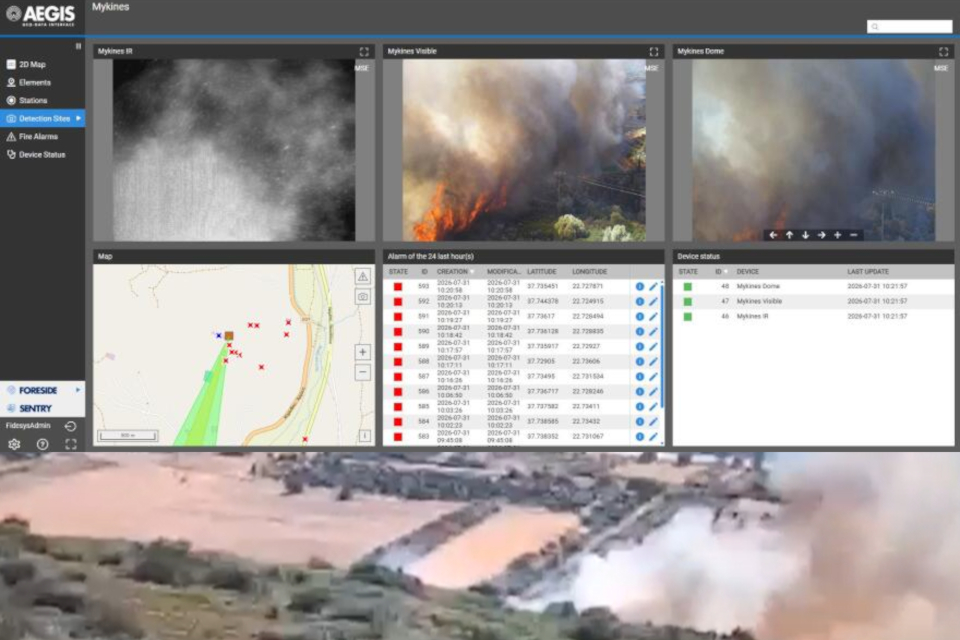
In Greece, on July 31, 2026, that the fire detection and alert system provided by CAE demonstrated its effectiveness in the field. The station installed in Mycenae detected a fire in Fichtia, in the Argolis region, automatically triggering the alarm and transmitting real-time images and data related to the event to the Coordination and Control Center.
The incident was reported by several Greek media outlets, including TO BHMA and Politic.gr, which also published images captured by the system during the event.
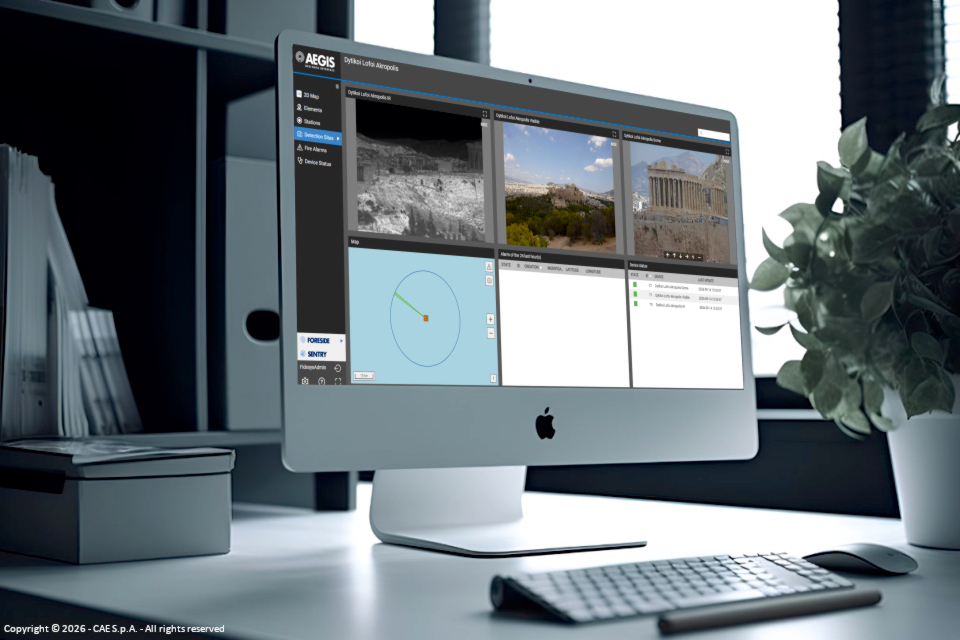
The Mycenae station is part of a fire surveillance and early detection network dedicated to protecting important archaeological sites, monuments, and areas of cultural and environmental value in Greece, currently being developed by CAE in collaboration with its Greek partner Cardel (to learn more, read the article dedicated to the project here).
Several stations are already operational, and upon completion of the project, the network will comprise 22 stations, protecting iconic sites such as the Acropolis, Ancient Olympia, and Knossos. Thanks to thermal and optical cameras with 360° rotation, remotely controlled cameras, and central control software, the system is designed to facilitate the early detection of fires and quickly provide operators with information useful for managing the incident, to help reduce response times and, consequently, potential damage.
The incident in Fichtia serves as a concrete example of the role that monitoring, early detection, and the timely availability of information can play in wildfire risk management, contributing to the protection of communities and cultural and environmental heritage of inestimable value.